🇹🇭 Digital Nomad Visa Thailand
Long-Term Resident (LTR) Visa — Work-from-Thailand (LTR Visa — Remote Worker Category)
What you need to apply
The honest breakdown
What's good
- 10-year duration — longest digital nomad visa available globally
- Foreign income is tax-exempt, even when remitted to Thailand
- Fast-track airport immigration lanes
- Digital work permit included — no separate work permit needed
- One of the lowest costs of living for a high-quality lifestyle
- Can bring dependents (spouse + children under 20)
Watch out for
- $80,000 income threshold is very high — excludes most freelancers
- Employer must meet $150M+ revenue requirement — rules out small companies
- THB 50,000 application fee is non-refundable if denied
- Complex application with many documents
- No path to Thai citizenship (this is a long stay, not an immigration pathway)
What it means for your taxes
LTR visa holders are exempt from Thai tax on foreign-source income, even if remitted to Thailand. Thai-source income is taxed at a flat 17% (vs. progressive rates up to 35% for regular residents). No requirement to file if you only have foreign income.
Official source: Always verify current requirements at Thai Board of Investment (LTR Visa) before applying. Regulations change frequently.
Why Thailand for digital nomads
Thailand has been the default nomad hub in Southeast Asia for a decade, and the infrastructure shows. Chiang Mai alone has 50+ coworking spaces, Bangkok has world-class everything, and the islands offer the beach-and-laptop fantasy that actually works (Koh Lanta and Koh Phangan have solid internet now). Monthly costs run $800-1,500 for a comfortable life including a private studio, eating out daily, and a coworking membership.
The visa situation has been Thailand’s weak point. For years, most nomads worked on tourist visas in a legal gray area. The 2024 DTV visa improved things for shorter stays, and the LTR visa covers long-term high earners. But there’s still no straightforward “digital nomad visa” for the average freelancer earning $2,000-4,000/month.
How to apply for the Thailand LTR visa
- Check eligibility — the Remote Worker category requires $80,000/year income (2-year history) OR $40,000/year with advanced degree. Your employer must have $150M+ annual revenue. If you don’t qualify, look at the DTV instead.
- Apply online — submit through the BOI (Board of Investment) LTR portal with employment verification, tax returns, insurance certificate, and criminal record check.
- Wait for pre-approval — BOI reviews in 20-30 business days. You’ll receive a pre-approval letter.
- Get the visa stamp — take the pre-approval to a Thai embassy/consulate, or apply for the visa on arrival at specified airports. Fee: THB 50,000.
- Activate in Thailand — report to immigration within 90 days of arrival. You’ll need to do 90-day reporting thereafter (can be done online).
Cost of living snapshot
Budget nomad in Chiang Mai: $800-1,200/month (studio apartment, street food, local coworking). Comfortable nomad in Bangkok: $1,500-2,500/month (condo, mix of dining, premium coworking, social activities). Islands: $1,000-2,000/month depending on season and island.
Tax implications
LTR visa holders get the best deal: zero tax on foreign income. DTV and tourist visa holders face a murkier situation — Thailand’s 2024 tax reform means foreign income remitted to Thailand is now technically taxable for residents (180+ days). Tax rates run 0-35% progressive, with the first THB 150,000 tax-free. Double taxation treaties exist with most Western countries. The practical reality: enforcement on foreign remote work income is still evolving.
Last verified: April 2026. Visa regulations change frequently — always verify with the official embassy or consulate before applying.
Common Questions
Can I get a Thailand digital nomad visa as a freelancer?
The LTR visa is difficult for freelancers because it requires employment with a company generating $150M+ annual revenue. Most freelancers use Tourist Visa Exemptions (30-60 days), the Thailand Elite Visa (5-20 years, $16,000-60,000), or the DTV (Destination Thailand Visa) which has a lower $500/month threshold but is limited to 180 days.
What is the Thailand DTV visa?
The Destination Thailand Visa (DTV) launched in 2024 as a more accessible option. It costs THB 10,000 (~$280), lasts 180 days (extendable to 360), and requires proof of remote work or enrollment in specific activities. The income threshold is much lower than the LTR. It's the practical choice for most digital nomads.
Do I need to pay taxes in Thailand as a digital nomad?
On the LTR visa, foreign-source income is fully tax-exempt. On other visa types, Thailand technically taxes worldwide income for tax residents (180+ days), but enforcement on foreign income has been inconsistent. Starting 2024, Thailand began stricter enforcement on remitted foreign income. Consult a Thai tax advisor if staying long-term on a non-LTR visa.
Can I open a Thai bank account on the LTR visa?
Yes. LTR holders can open bank accounts at most major Thai banks with their visa and passport. This is significantly easier than on a tourist visa, where most banks will refuse you.
How does Chiang Mai compare to Bangkok for remote work?
Chiang Mai is cheaper (~30-40% less), has a concentrated nomad community in the Old City/Nimman area, and excellent coworking infrastructure. Bangkok has more variety, better international flights, and more nightlife, but is hotter, more congested, and more expensive. Both have reliable 100+ Mbps internet.
Colivings in Thailand
5 colivings with chapters in Thailand

Alt Coliving
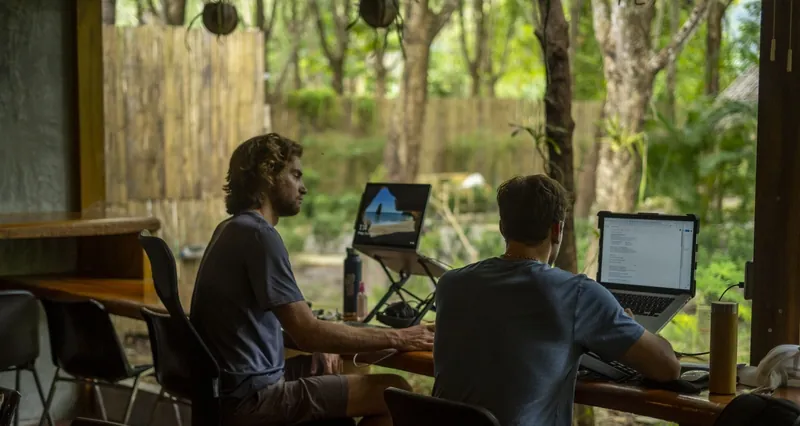
KoHub

The Social Club

The Social Club